Comparison
What Can You Use Instead of Macrame Cord? Substitutes Compared
Published
Short answer
Cotton clothesline is the closest substitute for macrame cord in plant hangers and practice pieces. Paracord works for bracelets, keychains and hangers. Jute and twine give a rough, rustic look. Embroidery floss and 1 to 2 mm leather cord replace thin cord in jewelry. None of them combs out into the soft fringe of single strand cotton cord.
This page is for the moment you want to start knotting and have no macrame cord, or want to know if the cord in the garage will do. Three things decide whether a substitute works: whether it holds a knot without slipping, whether its thickness fits the pattern, and whether the design needs fringe. The table compares seven common stand-ins on those points. Knot quality is described from how each material is built, so try a few knots before you cut a whole project.
Macrame cord alternatives compared
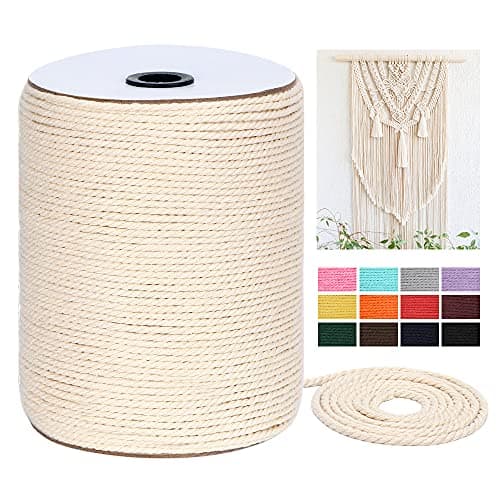
Macrame cord is soft cotton made to hold a knot and, in the twisted types, to comb out into fringe. Each substitute gives up one of those two things. Find the row for what you have and check the fringe column first if the pattern ends in a tassel.
| Substitute | Suits | How the knots look | Fringe |
|---|---|---|---|
| Paracord (nylon) | bracelets, keychains, lanyards, plant hangers | smooth and crisp; slippery, so pull each knot tight | none; melt the ends instead |
| Cotton clothesline | plant hangers, practice pieces, large simple knots | firm and round, close to braided macrame cord | none: it is braided, often over a core |
| Cotton twine | small practice pieces, thin hangers | small and plain | thin, wispy ends |
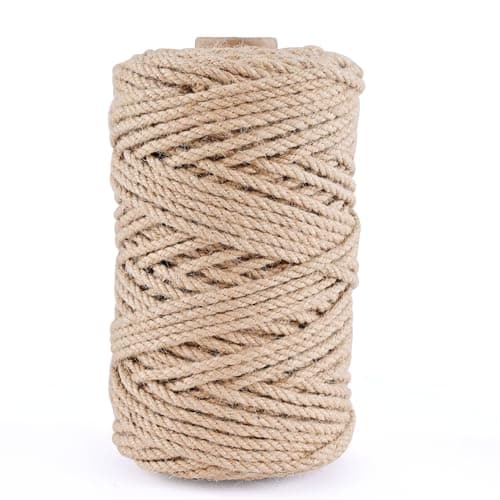
| Jute twine or cord | rustic plant hangers, garden pieces | rough and hairy, less defined | coarse, not soft |
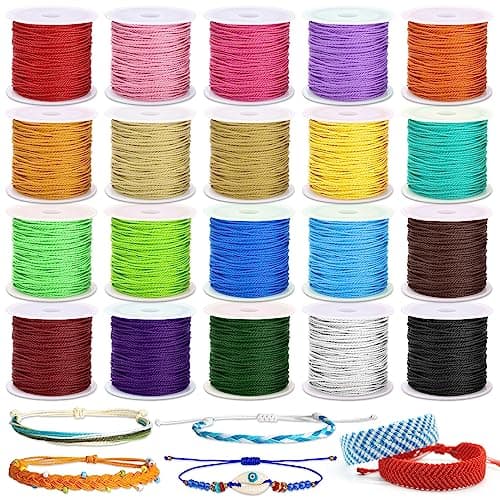
| Embroidery floss | friendship bracelets, micro-macrame | tiny and colorful | a small tassel at most |
| Leather cord, 1 to 2 mm | bracelets, necklaces, sliding knots | bulky and smooth; a few knots, not dense rows | none: leather does not fray |
| Hardware store rope | large, simple pieces | big and rough; stiff rope resists tight knots | coarse in natural fiber, none in synthetic |
Can you macrame with paracord?
Yes. Paracord is nylon cord with a braided sheath over a core of inner strands. The common type, sold as 550 paracord, is about 4 mm (5/32 in) thick in its military specification version, and commercial versions are often closer to 3 mm. That puts it in the same range as the 3 and 4 mm cord many macrame patterns call for, so such a pattern can be tied in paracord at close to the same size.
Macrame cord vs paracord comes down to surface and ends. Paracord is slick and a little elastic. Square knots and half hitches tie cleanly, but each one must be pulled tight or it works loose. It will not fringe, so the ends are cut and melted. Heat seal synthetic cord away from anything flammable.
Macrame cord vs rope, clothesline and twine
In listings, macrame rope and macrame cord are the same product, and 3 ply cord is often sold as twisted rope. Hardware store rope is something else: utility rope in sisal, manila, nylon or polypropylene, made to be stiff and hard wearing. It knots into large, rough shapes and suits only big, simple pieces. It is sold in inches: 1/4 in is 6.4 mm and 3/8 in is 9.5 mm. The conversion chart lists the rest.
Cotton clothesline is the friendliest of the three. It is braided cotton, so it behaves like braided macrame cord: firm, round knots and no fringe. Many clotheslines have a synthetic core, which is stiffer and takes dye differently from the cotton cover. Check the label.
Twine is thin. Cotton kitchen twine ties small, plain knots and is fine for practice. Garden twine is usually jute: rough, hairy and stiffer than cotton. If the rustic look is the goal, the jute cord guide covers jute and hemp cord sold for knotting.
Can you macrame with embroidery floss or leather cord?
Embroidery floss works for jewelry scale knotting. It is a loosely twisted cotton thread of six strands that can be separated. Friendship bracelets are tied in floss with the same knot macrame calls a double half hitch. Floss is far too thin for wall hangings or plant hangers.
Leather cord of 1 to 2 mm also works for jewelry, with limits. Leather is stiff and does not compress, so knots are bulky and dense rows of knots do not sit flat. Keep to a few square knots, overhand knots and sliding closures. It does not fray, so there is no fringe. For patterns with many small knots, the waxed polyester and nylon cords in the bracelet cord guide are made for the job.
Use a substitute when
A stand-in is a sound choice when the design does not depend on the things only macrame cord does: soft knots, combed fringe and an even, matte cotton surface.
- You are practicing knots. Clothesline, paracord or twine teach a square knot as well as cord does.
- The piece has no fringe: a plant hanger that ends in a gathering knot, a keychain with a melted end, a bracelet.
- The piece lives outside or gets wet. Cotton absorbs moisture and can mildew, so a synthetic cord is the better pick there.
- You want the rustic look of jute or the slim, sleek look of leather, and accept rougher or bulkier knots.
Note.Yarn is a separate case with its own answer per yarn type: see can you macrame with yarn.
Buy macrame cord when
Some results cannot be had from a substitute. If one of these describes the project, the cord types comparison shows which construction to buy.
- The design ends in combed fringe, feathers or leaves. Only twisted cotton cord, single strand or 3 ply, combs out.
- The pattern has dense rows of double half hitch knots that must lie flat and even.
- You plan to dye the piece. Cotton takes all-purpose dye, while cord that is mostly polyester needs a dye for synthetics.
- You are following a pattern for a wall hanging and want it to match the photo in size and texture.
How long to cut a substitute
The usual rule still applies: cut each strand about 4 to 4.5 times the finished length for standard knots, and about 8 times for a cord folded over a dowel or ring. Add fringe if there is any, then a margin of 10 to 15 percent. A bracelet in floss or thin cord needs a folded working cord of about 8 to 10 times the knotted length.
Stiff or thick material uses more length in every knot, and the cord charts checked for this site do not cover rope or clothesline. Use the cord calculator for a starting range. Then tie a short test strip, mark where it starts and ends, untie it and measure what it used.
Quick answers
One line per substitute. In each case the test is the same: tie five or six knots and see if they hold and look the way you want.
- Can you macrame with paracord? Yes. It is about 3 to 4 mm thick and ties clean knots, but it is slippery and does not fringe. Melt the ends.
- Macrame cord vs rope: is there a difference? Macrame rope is macrame cord. Hardware store rope is stiffer and rougher and suits only large, simple pieces.
- Macrame cord vs twine: which is better? Cord. Twine is thinner and rougher. Cotton twine is fine for practice, and jute twine gives a rustic look.
- Can you macrame with embroidery floss? Yes, for bracelets and micro-macrame. It is too thin for hangers and wall pieces.
- Can you macrame with leather cord? Yes, in 1 to 2 mm for jewelry with a few knots. It is too stiff for dense patterns and has no fringe.