How to Make Knots With Cord: 6 Basic Knots for Beginners
Published
Gear for this job
All 7 picks compared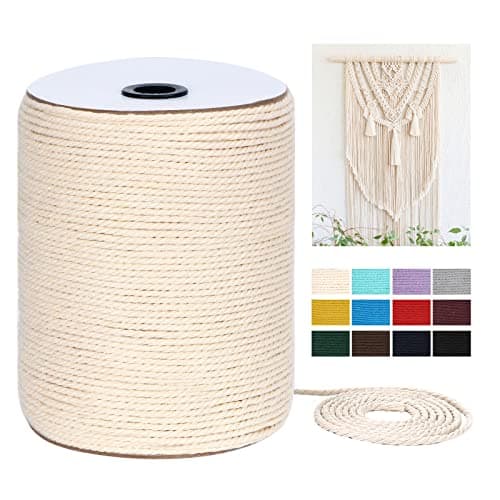
HOMEBOBO 3 ply 3mm natural cotton cord, 328 yd
See price on AmazonSee it on Amazon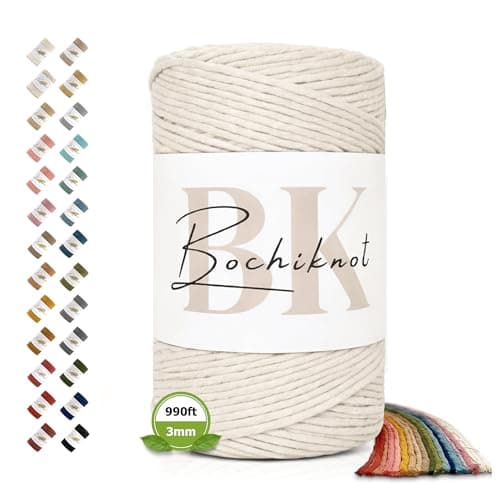
Bochiknot single strand 3mm cotton cord, 330 yd
See price on AmazonSee it on Amazon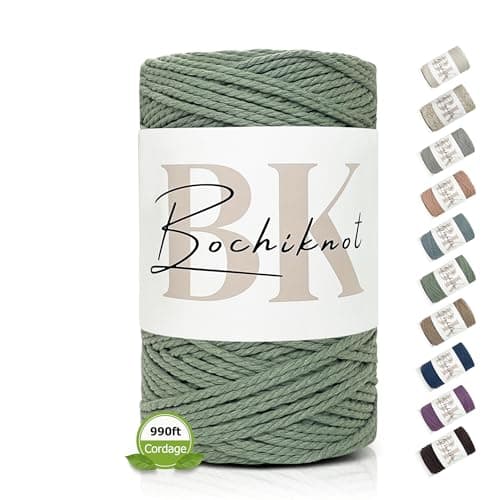
Bochiknot 3 ply 3mm cotton cord, 330 yd, sage
See price on AmazonSee it on Amazon
To make a knot, you cross the cord over itself to form a loop, pass an end through that loop and pull it snug. Six knots cover almost every cord craft: the overhand, lark's head, square knot, half knot spiral, double half hitch and wrap knot, and each takes under a minute to learn once you have a practice length of cord in your hands.
What you need to practice knots
Use soft, thick cord for learning. Cord of 3 mm to 5 mm shows every loop clearly, stays where you put it and is easy to pull undone, which matters because you will redo each knot several times. Thin 1 mm to 2 mm cord is fine for jewelry later, but it hides mistakes and is harder on the fingers.
Cut four pieces about 1 yard (36 in) long for a practice swatch, plus one short piece to act as a holding cord. Cotton single strand or 3 ply cord is the easiest to learn on. If you have no cord yet, the 3mm guide compares spools by construction and length.
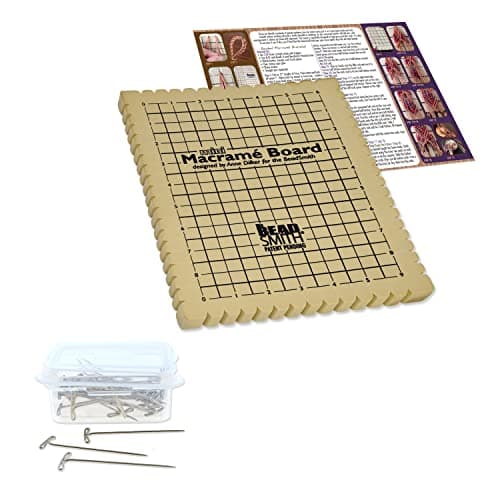
A flat surface to pin cords to helps more than you would expect. A board with T-pins keeps the work from shifting while you learn where each cord goes, and it frees both hands for tightening.
The overhand knot
The overhand knot is the simplest knot there is. Make a loop by crossing the end of the cord over the standing part, pass the end through the loop from front to back, and pull both sides until it closes into a small lump.
It is used to stop cord ends from slipping through beads or holes, to finish the tails of a bracelet and to add a small stopper at the end of a keychain strap. Pull slowly and keep the cord flat as it closes, otherwise it twists into a tight, lumpy knot that is hard to undo.
The lark's head knot
The lark's head knot attaches a cord to a dowel, ring or another cord, and it is the usual first step of a wall hanging or plant hanger. Fold the cord in half. Lay the fold over the front of the dowel, bring the fold behind it, then pull the two loose ends down through the loop that formed and tighten.
Reverse the direction, so the fold goes behind the dowel first and the ends come through toward you, and you get a reverse lark's head. The result looks like a small braid on the front instead of a smooth loop. Mixing the two across a row is a simple way to add texture.
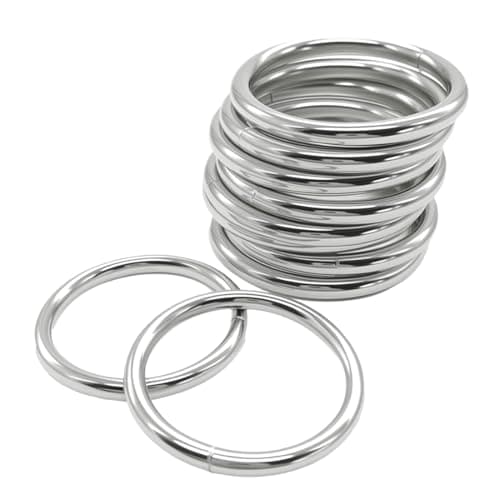
Rings work the same way as dowels, which is why a ring is a common starting point for plant hangers. You can browse sizes in the rings and hoops guide.
The square knot
The square knot is the main knot in macrame. Use four cords: the two in the middle are filler cords that stay straight, and the two outer cords do the tying. Take the left cord, pass it over the two filler cords and under the right cord. Take the right cord, pass it behind the fillers and out through the loop on the left side, then pull both outer cords to tighten. That is the first half.
For the second half, mirror it. Take the right cord over the fillers and under the left cord, bring the left cord behind the fillers and out through the loop on the right, then tighten. One left half plus one right half makes a complete square knot, and it should sit flat with a neat horizontal bar.
If your knot twists or leans to one side, you are repeating the same half instead of alternating. Check that you alternated the starting side every time.
The how-to articles on this site use the square knot in bracelets and other small projects. The macrame knots chart shows it next to the other basics.
The half knot spiral
Tie only the first half of the square knot, over and over, always starting from the same side. After a few knots the work starts to twist into a spiral, which is called a half knot spiral or a twisted sinnet. It is quick, it needs no counting and it makes a good cord for straps, keychains and the long drops of plant hangers.
The spiral turns around the filler cords, so a 6 in section needs noticeably more cord than a straight square knot sinnet of the same length. Allow extra when you cut your cords. Roughly 4 to 5 inches of cord is used for every inch of finished spiral with thick cord, but this varies with the cord and how tight you pull, so test on a scrap first.
The double half hitch
The double half hitch ties one cord onto another, which makes it the knot for diagonal and horizontal lines. Hold one cord taut as the holding cord. Take the working cord, pass it up and over the holding cord, bring the end through the loop you made, and pull. Repeat the same wrap a second time right beside it. Two identical wraps make one double half hitch.
Tie a row of them along a holding cord and you get a firm ridge. Angled rows form leaf shapes and chevrons. Keep the holding cord pulled tight with one hand, otherwise the row waves.
The wrap knot
The wrap knot, also called the gathering knot, bundles a group of cords together. Make a loop with a separate length of cord, lay it against the bundle, wrap the long end tightly around both the bundle and the loop for several turns, then pass the end through the loop and pull the other end to bury it inside the wraps.
Wrap knots finish tassels and plant hangers and hide the junction of the cords. A wide wrap of 1 in or more looks tidier than a tight wrap of two or three turns. A complete step by step version is in the gathering knot article.
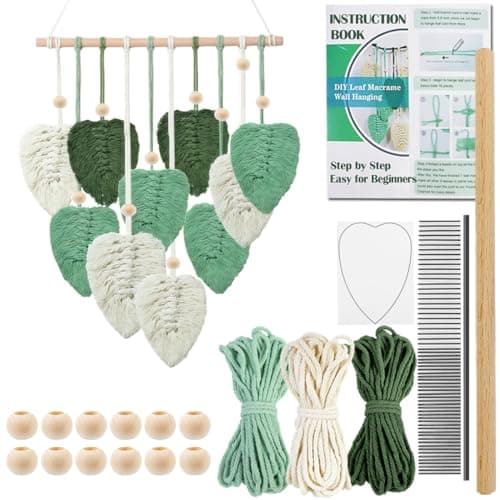
Once these six feel automatic, a beginner kit gives you a full project to practice on, with cord and a dowel included. Start with 4 cords and a short holding cord, and add more cords only after the basic rhythm feels automatic.
Frequently asked questions
What is the easiest knot to learn first? The overhand knot, followed by the lark's head. Both take a single motion and let you see how cord crosses, passes through a loop and tightens.
How do I stop my knots from coming out uneven? Keep the filler cords taut, pull each knot to the same tightness and tie on a flat surface. Uneven tension is the most common cause of crooked work.
How much cord should I use to practice? A 1 yard length per cord is enough for a swatch of square knots and half knots. Practice on thick cord first and switch to thinner cord when your hands know the pattern.
Do I need special cord for macrame knots? No. Any soft, flexible cord that holds a knot works for practice. Natural cotton in 3 mm to 5 mm is the usual choice because it grips itself and undoes easily.