How to Make a Slip Knot With Cord, Yarn or String
Published
Gear for this job
All 7 picks compared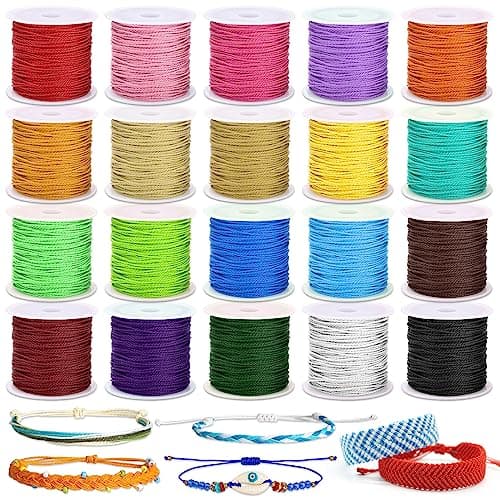
Cridoz waxed polyester 1 mm, 20 rolls, 500 yd
See price on AmazonSee it on Amazon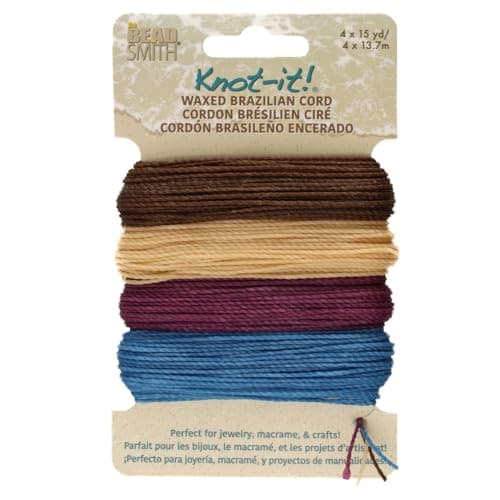
Beadsmith Knot It waxed polyester 0.7 mm, 4 x 15 yd
See price on AmazonSee it on Amazon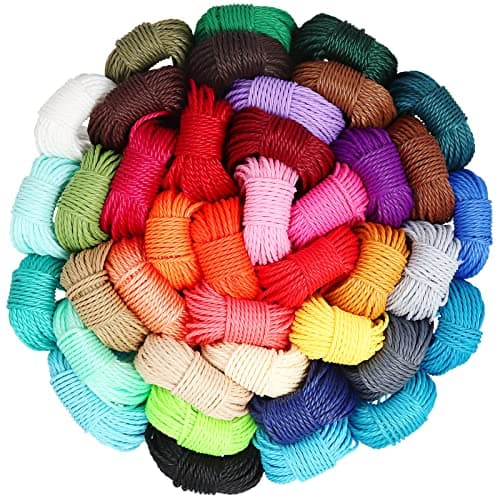
WillingTee waxed polyester 1 mm, 40 colors, 437 yd
See price on AmazonSee it on Amazon
A slip knot is a loop that tightens when you pull the standing end of the cord and loosens when you pull the loop itself. To make one, form a loop, pull a bight of the working cord through it and tighten, so the knot sits on the loop and never locks.
How to tie a slip knot in four steps
Leave a tail of about 6 in on the cord. Lay the cord on a table or hold it in your left hand, and cross the tail over the long standing part to make a circle. Pinch the crossing point with your thumb and finger.
Reach through the circle, grab the standing part, and pull a bight of it back through the circle. The bight becomes the new loop. Hold the tail in one hand and the loop in the other, and pull gently on both until the knot closes on the base of the loop.
To tighten the loop, pull the standing part. To open it, pull on the loop itself. If the knot locks and will not move, you probably passed the tail through the circle instead of a bight of the standing part, which makes a plain overhand knot. Undo it and repeat the steps, reaching through with the standing part this time.
With practice the whole movement takes about three seconds. Try it on a thick cord first, because the circle and the bight are easy to see, and then move down to thinner cord and yarn.
A second method suits thick cord. Make a loop, then tie an overhand knot around the standing part inside it, or simply tie an overhand knot in the tail around the standing part and leave it loose. Pulling the standing part then slides the knot along and closes the loop. Both give the same working result, so use whichever your hands find easier.
Slip knot or sliding knot
The two are often mixed up. A slip knot is a single knot that slides on its own standing part and it is used to start crochet, hold a cord on a hook or make a quick noose. A sliding knot is a closure made of two knots, each tied around the other cord, so that the two ends can slide apart to enlarge a bracelet or loop and slide together to close it.
In jewelry, a sliding knot closure replaces a clasp. Wrap one end around both cords three times and pull it through the wraps, then repeat with the other end on the opposite side. The how-to article on macrame bracelets uses a sliding clasp of this type, and the cord choice matters because the cords must slide without fraying.
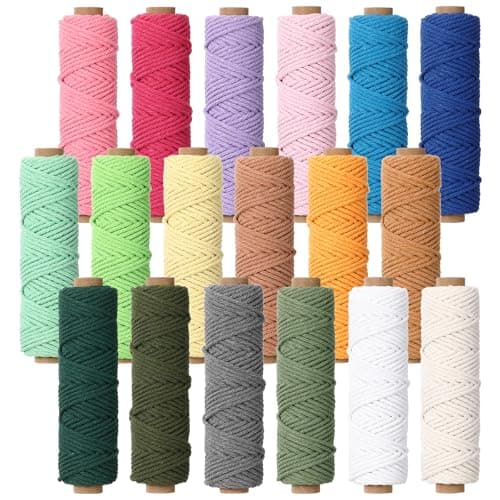
If you want a plain adjustable bracelet cord, pick a smooth cord of about 1 mm to 1.5 mm. Thicker cord makes a bulky closure that does not slide easily. Compare waxed and nylon options in the bracelet cord guide.
Using a slip knot to start crochet
Almost every crochet project begins with a slip knot on the hook. Make the knot as above, slide the loop onto the hook and tighten the standing part until the loop fits snugly but turns freely on the hook. A knot that is too tight makes the first chain stitch hard to work.
The slip knot is not counted as a stitch. Crochet macrame bags and baskets use thick cord with large hooks, so make the loop slightly looser to start. For thick macrame-type cord, a 5 mm to 8 mm hook is common, as the crochet hook chart shows.
If the slip knot loosens after a few stitches, you probably tied a loop where the working end pulled through instead of the standing part. Redo the knot and check which strand tightens the loop.
Slip knots in macrame and cord crafts
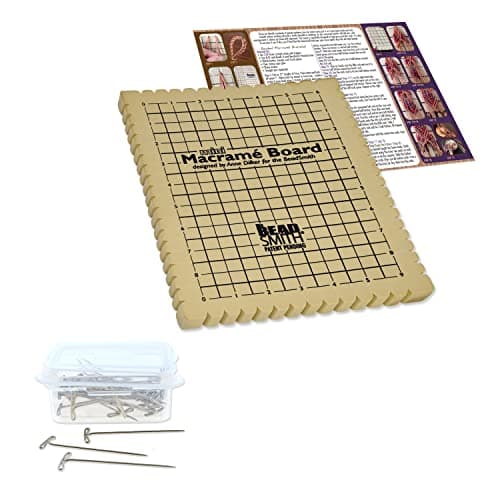
Macrame uses slip knots as temporary holders. Tie a slip knot around a bundle of cords to hold them out of the way while you work another section, and release it by pulling the tail. A slip knot in a thin scrap cord can hold a project to a board without pins.
It also makes a quick adjustable loop for hanging. A cord with a slip knot can be pulled over a hook to hold a light plant hanger while you tie the rest, but a slip knot is not a safe load-bearing knot for anything heavy, because it can tighten and shift under load. Use a proper knot, tied to a ring, for anything that carries weight.
Keychains and zipper pulls often use a slip knot in the strap so the loop can be resized. Compare cord for keychains by thickness and number of colors.
Common slip knot problems
If the knot will not slide, the cord may be too stiff or too thick for the size of loop. Stiff polyester or waxed cord grips itself, and it often needs a larger starting loop. A soft cotton or nylon cord slides better.
If the knot slides too easily and falls apart, tie a stopper such as an overhand knot in the tail. This keeps the knot from running off the end of the cord. Finally, if the loop twists, undo it and keep the cord flat while you tie.
Slip knots also release more easily when the cord has some stretch or softness, so a tight pull on hard cotton rope may need a fingernail or a pin to loosen the bight. Pull the loop open gradually rather than yanking, which keeps the strands from fraying at the crossing.
Frequently asked questions
Is a slip knot the same as a slipknot? Yes, both spellings name the same knot, and some writers use it for a noose made the same way.
Can a slip knot come undone by itself? Yes. It is meant to release when you pull the tail. Add an overhand stopper knot in the tail if it needs to hold.
How long should the tail be? A tail of 4 to 6 in is comfortable to hold. For crochet, a tail that will be woven in later should be at least 4 in.
What cord is best for practicing? A smooth cotton or nylon cord of 2 mm to 4 mm, because the loop is easy to see and the knot moves without friction.